James Whitaker had never trusted surprises.
In his world—one ruled by architectural deadlines, steel frameworks, and contracts worth millions—surprises usually meant disaster. A miscalculation. A lawsuit. A collapse. Precision was his religion. Every minute of his day was accounted for, every suit tailored with surgical accuracy, every ounce of patience carefully rationed.
He lived alone in a striking modern house perched in the Connecticut hills—a masterpiece of glass, steel, and concrete that looked more like an exhibition than a home. It was elegant. Impressive. And painfully lifeless.
Since Eleanor, his wife, died four years earlier, the silence had thickened, pressing against the walls like fog. James answered it the only way he knew how: by working longer hours. He left before sunrise and returned well after dark.
But this Tuesday was different.
A client canceled at the last minute. A key engineer was delayed. For the first time in years, James Whitaker found himself with an empty two-hour block on his calendar.
On impulse, he drove home.
Officially, he told himself he needed a file from his study. Unofficially, he just wanted to escape the city’s noise.
He parked his black Mercedes in the driveway. The house rose before him, silent and imposing. He unlocked the door and stepped inside.
Cool air met him—perfectly regulated. The faint scent of lemon cleaner lingered, mixed with something else. Emptiness.
“Hello?” he called, tossing his keys onto the marble table.
No response.
James frowned. Tuesdays were cleaning days. Maria came every Tuesday and Friday. Quiet. Efficient. Barely noticeable. To him, she’d always been more function than person—someone who left the house spotless and collected a check.
He followed the hallway toward the kitchen, his footsteps echoing sharply.
Then he turned the corner.
And stopped.
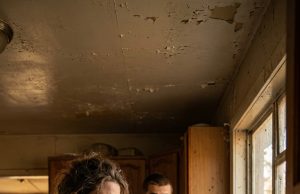
The kitchen—normally pristine and untouched—looked… different. Human.
Maria wasn’t cleaning.
She was kneeling.
In the narrow space between the kitchen island and the refrigerator, a small blanket was spread on the floor. Sitting on it were two little girls—twins, no older than two. Dark curls framed their solemn faces. Their clothes were faded but clean.
Maria knelt across from them, hands clasped. The girls mimicked her, eyes shut tight.
Between them lay two paper plates.
Each plate held three thin apple slices and one cracker.
They were praying.
James froze, gripping the doorway. He felt like an intruder in his own home.
Maria’s voice trembled softly.
“Thank you, Lord, for this food. Thank you for keeping us safe. Please watch over my girls…”
One child peeked through one eye—and saw him.
“Má…” she whispered, tugging Maria’s sleeve.
Maria opened her eyes and followed the gaze.
The color drained from her face. She scrambled upright, panic overtaking her. A water bottle toppled over.
“Mr. Whitaker—sir! I didn’t know you’d be home. I’m so sorry!” Her hands shook as she tried to gather the blanket. “Girls, get up. We have to go. I’m sorry. Please—let me explain—”
“Stop.”
The word came out sharp.
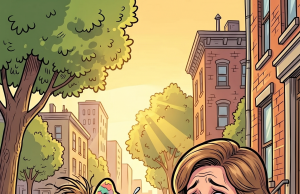
Maria flinched instinctively, pulling the twins behind her legs, shielding them with her body. The fear in that movement struck James harder than any accusation.
“I know the rules,” she sobbed. “No visitors. No children. But my babysitter quit this morning. I had nowhere else. It was cold. I thought if we stayed quiet—”
James looked at her closely for the first time.
The exhaustion in her eyes. The worn sweater hem. Shoes rubbed thin at the heels.
Then he looked at the plates.
“That’s lunch?” he asked quietly.
Maria lowered her gaze. “We’re… fasting. A little.”
The twins weren’t fasting. They were hungry.
Something twisted inside James—anger, guilt, something deeper.
Without another word, he crossed the kitchen and opened the refrigerator.
It was overflowing. Cheese, yogurt, fresh fruit, artisan bread. Food he rarely touched.
He grabbed eggs. Cheese. Bread. Strawberries. Milk.
He set them on the counter with a thud.
“Sit down,” he said.
“Sir, I can leave—”
“Sit down, Maria.”
She hesitated, then lifted the girls onto the tall stools. They looked impossibly small.
James rolled up his sleeves and turned on the stove.
Chapter 2: The Omelet
The kitchen filled with sound. Butter sizzling. Eggs whisking. Toast popping.
James hadn’t cooked like this since Eleanor died—but muscle memory returned.
He made soft scrambled eggs with cheese. Buttered toast. Fresh strawberries. Poured milk.
He placed the plates in front of the girls.
“Eat.”
They stared in awe, then looked to their mother. Maria nodded through tears.
They ate like children who hadn’t seen warmth in days.
James placed a third plate in front of Maria.
“I’m not hungry,” she whispered.
“Eat,” he said flatly.
She did.
The silence was no longer empty. It was alive.
“Why?” James asked suddenly.
Maria froze.
“You work hard,” he said. “Why apples and crackers?”
“The agency keeps half,” she said. “My husband left. Took the car. Took the savings. Rent went up. We’re living in a motel.”
James felt cold.
“And today?”
“The babysitter got sick. If I miss work, they drop me. Payday’s Friday.”
He stared at the luxury around them and felt sick with shame.
“What are their names?”
“Isabella and Sofia.”
“Good,” Isabella announced, holding up her fork.
James smiled—an unfamiliar feeling.
Chapter 3: The Blueprint
“You’re not working for the agency anymore,” James said.
Maria panicked—until he explained.
He offered her direct employment. A salary triple her pay. A guest house. Stability.
She didn’t understand why.
“Because I came home early,” he said. “And because you were praying.”
She hugged him.
Chapter 4: The Transformation
The house changed.
It filled with laughter. Cooking. Toys.
James came home earlier.
One evening, he crawled into a pillow fort and drank pretend tea.
Maria watched, smiling.
Chapter 5: The Real Prayer
Thanksgiving returned.
The table was full. So was the house.
James toasted not success—but love.
The twins led the prayer.
For the first time in years, James felt whole.
Chapter 6: The First Day of School
Years passed.
The house was no longer silent.
James tied shoelaces. Packed lunches. Watched school buses.
But danger returned.
Chapter 7–11: The Threat
Carlos came back.
He threatened. Extorted. Tried to take the girls.
James fought with lawyers, security, and resolve.
At the schoolyard, Isabella spoke the truth:
“You’re not our papa. Mr. Jay is.”
Carlos was arrested.
Chapter 12–14: The Legacy
James collapsed from the stress—but survived.
He realized love needed protection on paper, too.
He adopted Maria. Secured the girls’ future.
At Thanksgiving, the adoption decree hung proudly.
James raised his glass.
“To family,” he said.
“The one you’re born into… and the one you find kneeling on the kitchen floor.”
He had built many things in his life.
But this—
This was the one that mattered.
THE END