The Architecture of a Necessary Crime
The heavy, steel emergency wrench hit the glass of the police SUV with a sound like a gunshot, shattering the reinforced pane into ten thousand shimmering diamonds that scattered across the hot asphalt of the courthouse square. It was a deliberate, almost surgical strike, performed by a man whose hands didn’t tremble even as the law began to converge upon him.
“Arrest me. Please. You have to take me in right now.”
The man’s voice possessed a staggering, gravelly calm that felt entirely out of place amidst the sudden chaos. He dropped the tool as if it were a spent match, sinking to his knees on the pavement and lacing his fingers behind his head in a practiced gesture of surrender. Across the street, I sat on a weathered park bench, my lunch forgotten as my coffee cup slipped from my numb fingers, splattering dark liquid across the concrete. I was witnessing something that defied the simple logic of a Tuesday afternoon in downtown Columbus.
This wasn’t the frantic outburst of a man who had lost his grip on reality; this was a calculated sacrifice. Three officers erupted from the heavy bronze doors of the courthouse, their boots thundering against the stone steps as they shouted commands that echoed through the square. One sergeant, his face flushed with a mixture of confusion and professional indignation, screamed about the felony destruction of city property and the certainty of a prison cell.
The old man, whose white hair stood out like a beacon against the faded blue of his fire department jacket, simply nodded. “I know the consequences, Sergeant. Just take me in. Make it fast, and make sure everybody is watching.”
The Living Piece of a Lost Son
The man’s name, as I would later discover through a series of persistent inquiries, was Silas Thorne. He was a retired captain from the city’s third precinct, a man who had spent thirty-five years pulling strangers out of the dark, only to find himself unable to rescue the one thing that mattered most. The dog arrived seconds after the glass broke—a Golden Retriever mix that came tearing across the manicured grass, trailing a snapped leather lead.
Following the dog was a man who looked like he had been sculpted by an expensive tailor. His suit cost more than a mid-sized sedan, and his face was a terrifying mask of aristocratic fury. But the dog didn’t even glance back at him. The animal sprinted directly into the tightening circle of police officers, ignoring the drawn tasers and the barked orders. He dove straight into Silas’s chest, burying his snout into the old firefighter’s neck with a whimper so high-pitched it sounded like a human sob.
Silas ignored the handguards and the looming cuffs. He wrapped his broad, calloused arms around the shaking dog and let out a ragged breath that finally broke his composure. In that moment, the courthouse square became a sanctuary for two broken souls, and I knew I couldn’t walk away until I understood why a hero was begging for a jail cell.
The backstory, whispered to me the following morning by a clerk who had seen the heartbreak unfold in slow motion, was a tapestry of grief and systemic failure. The dog was named Barnaby, and he had originally belonged to Silas’s only son, Arthur. When Arthur was taken in a sudden, senseless highway accident three years prior, Barnaby became the last living bridge to a life Silas wasn’t ready to let go of.
The Invisible Map of Misery
The man in the suit was Julian Vane, the new partner of Arthur’s widow. Julian was a man who viewed the world as a game of leverage, and he viewed Barnaby as an obstacle to his absolute control over his new domestic life. He didn’t just dislike the dog; he viewed the animal’s presence as a lingering ghost of the man he was trying to replace. He kept Barnaby only to spite Silas, using the dog as a leash to keep the old man at a distance while simultaneously punishing the animal for its loyalty to a dead master.
For months, Silas had watched from the sidewalk as Barnaby withered away. The energetic, joyful creature who once lived for the local park was now a hollow-eyed specter, his ribs visible beneath a coat that had lost its luster. Silas had tried every legal avenue available to him. He had filled journals with dates and observations; he had taken blurry photos of Barnaby limping through the yard; he had called animal control until they stopped answering his number.
But Julian was a man of significant influence and even greater charm. Whenever the authorities arrived at the iron gates of his estate, he met them with a smile and a perfectly logical explanation. He claimed the dog was old, that he was clumsy on the marble floors, or that he’d had a run-in with a stray. Because a Golden Retriever’s thick, honey-colored fur can hide a multitude of sins, the officers always left without a reason to intervene. Legally, Barnaby was a piece of property—a chair with a heartbeat—and Silas had no standing to claim him.
That Tuesday morning, Silas had sat in a family court room and watched a judge sigh with genuine pity before denying his petition for custody. There was no “undeniable proof” of physical harm, and the law favored the owner of record. Silas walked out of that building knowing that if he simply took the dog, he would be a common thief, and Barnaby would be returned to that house within the hour.
The Strategy of the Shattered Pane
When Silas exited the courthouse, he saw Julian waiting in the square, jerking Barnaby’s lead with a casual, practiced cruelty because the dog was moving too slowly for his liking. That was the instant Silas realized he couldn’t win by following the rules of a broken game. He had to force the law to look beneath the fur in a way that couldn’t be ignored or filed away in a drawer.
The crash of the SUV window was the opening bell. When the K9 officer—a seasoned professional named Sergeant Miller—stepped in to assist with the arrest, her hand brushed against Barnaby’s flank. She didn’t just feel fur; she felt the jagged, irregular hitch of a rib that hadn’t set properly.
She knelt in the grass, her movements becoming clinical and sharp. Slowly, she pushed the thick golden hair back, and the square went silent as the officers realized what they were actually looking at. Beneath the beautiful exterior were the marks of a slow, deliberate dismantling: fresh cigarette burns, old hematomas, and the unmistakable evidence of a life lived in terror.
Because this discovery was made in the middle of a felony arrest and a public disturbance, the officers had the immediate legal authority to seize Barnaby as evidence of a crime. Julian rushed forward, his face slick with sweat as he tried to reclaim his “property,” but the K9 officer stepped into his path with a look of cold, professional disgust. “You aren’t touching this animal again, Mr. Vane. Not today, and likely not ever.”
The Verdict of the Heart
Silas Thorne was booked for a misdemeanor, a charge he accepted with a smile that hadn’t touched his face in three years. He spent the night in a holding cell, knowing that while he was behind bars, Barnaby was finally in the care of a trauma-certified veterinarian.
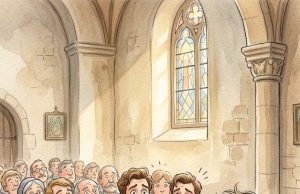
Three months later, the courthouse felt different. The air was crisp, and the room was packed with off-duty firefighters, a sea of blue shirts and silent support. Silas stood before the same judge who had once turned him away, pleading guilty to the destruction of city property.
The judge looked at the medical reports from the veterinary clinic. She looked at the photos of Julian Vane being led away in handcuffs, currently awaiting trial for multiple counts of felony animal cruelty. Then she looked at Silas, a man who had risked his pension and his freedom for a creature that couldn’t say thank you.
“Mr. Thorne, you have committed a crime against this city’s property,” the judge began, her voice echoing in the hallowed chamber. “And you will be required to pay for every cent of that repair, along with completing one hundred hours of service at the county rescue league. However, this court recognizes that sometimes the letter of the law is blind to the spirit of justice.”
She reached across her bench and handed Silas a document that bore the gold seal of the state. It was a permanent transfer of ownership. “Go home, Silas. And take your son’s dog with you.”
The square outside was bathed in the amber light of a late afternoon sun when the double doors opened. Silas stood on the top step, a brand-new red leash gripped in his hand. When Barnaby came bounding through the entrance, he was unrecognizable from the specter I had seen months ago. He was thick-chested, bright-eyed, and radiating a joy that seemed to fill the entire street.
The dog didn’t just run; he launched himself at Silas, planting his paws on the old man’s shoulders and burying his face in the crook of his neck. Silas wept openly, his tears soaking into the golden fur, and I realized then that I had witnessed the most significant rescue of his long and honorable life. Silas Thorne had broken the law to prove that some things are too precious to be governed by the cold rules of property, and in the shadow of the courthouse, loyalty had finally found its way home.