When my grandmother Grace passed away, I was sure I’d been forgotten.
At the will reading, my mother practically lunged for the house before the lawyer even finished the address. My sister Cynthia snatched the car keys as though they had always been hers. Everyone left with something shiny, enviable—something worth boasting about.
Then the lawyer turned to me, offering a thin package with a gentle, pitying smile that made my stomach twist.
Inside was a single framed photo: Grandma and me at the zoo when I was six. My pigtails were crooked, my cheeks sticky with melted ice cream, and a giraffe was lowering its head toward us. Grandma’s hand held mine—steady, soft, patient.
That was all. No check. No heirlooms. Just a picture in a cracked wooden frame.
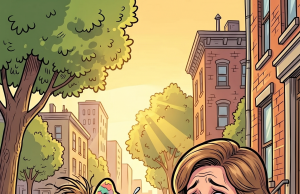
I drove home furious, convinced it simply confirmed my role in the family: the overlooked one, the helper, the daughter who never demanded anything. I tossed the frame onto the table and ignored it. Later, annoyed by the cracked wood, I opened the back panel to fix it.
A small envelope fluttered out.

Sealed with Grandma’s lavender-patterned tape, inside were stock certificates, account summaries, and a single key taped to an index card. In her looping handwriting: For when you’re ready.
I wasn’t ready. But the next morning, I took it to the bank. They brought out a safe-deposit box and left me alone. Inside were property deeds I’d never heard of, decades of careful investments, and the deed to the land beneath her house. My mother thought she had inherited the home. But Grandma had left the ground itself to me—quietly, deliberately.
I cried harder than I had at her funeral. Not for the money, but for the message: I saw you. I trusted you.
With the inheritance, I bought the house back—land and all—and transformed it. I ripped out the old carpet, polished the floors, filled the rooms with sunlight. I painted the door the soft green of Grandma’s favorite cardigan.
The parlor became a free lending library.
The dining room became a soup kitchen open to anyone who needed warmth or company.
I named it Grace’s Corner and placed a brass plaque on the stoop.
Word spread quickly. Children came for comics and apples, parents wandered in shyly for soup and peace, lonely folks found a place where no one asked for explanations. The house buzzed with life—whispers over homework, laughter, debates about superheroes. The smell of garlic and rosemary drifted onto the street.
One evening, without thinking, I set out two mugs—one for myself, one for Grandma. Habit. Memory. Love.
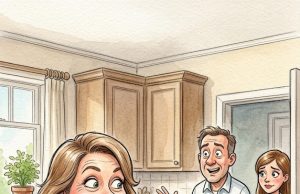
Months later, Cynthia showed up at the door, mascara streaked, shivering. She didn’t ask for money. She only asked if she could come inside.
She talked for hours—about regret, exhaustion, heartbreak.
I told her, “I won’t give you cash.”
She stiffened, bracing for rejection—until I slid an apron toward her.
“But if you want to stay, you’ll work. Dishes, prep, register. Be someone Grandma would be proud of.”
She hesitated… then put it on.
The next morning she arrived early, washed pots until her fingers puckered, served soup with gentleness, listened to a boy describe his science project like it mattered. At closing, she swept the floor slowly and whispered, “I didn’t realize how much I missed belonging.”
That’s when I understood: the photograph hadn’t been an afterthought. It had been the beginning. Grandma didn’t leave me a possession—she left me a calling.
The true inheritance wasn’t money.

It was purpose.
It was the people walking through that door—kids, parents, strangers becoming family, siblings learning to forgive.
Some afternoons, when the house hums with warmth, I hold that zoo photo up to the light. The giraffe’s lashes glow. Grandma’s hand still holds mine. And Grace’s Corner shines with a love that starts small and grows outward.
My mother visits now, bringing cornbread, wiping counters, listening to stories. We no longer talk about the will. Only about the people we’re feeding.
People often ask, “What did your grandmother leave you?”
I tell them: Everything.
Because I finally understand what “everything” meant—
Sometimes a cracked frame.
Sometimes a key.
Sometimes a place where anyone who walks in the door feels like they matter.
Grace’s Corner is hers as much as it is mine. Every bowl, every book, every warm seat.
All she really left me… was love.
And somehow, that was enough to build a whole new life.