The Multiplied Lifeline
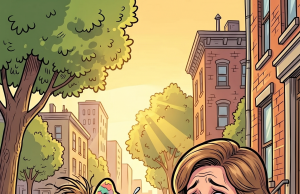
I was entering my third trimester, completely broke, utterly drained, and fighting to keep my emotions under control when I first crossed paths with him—a fragile old man with sorrowful eyes, slumped shoulders, and a scruffy mutt leaning heavily against his shin as if the animal were his solitary anchor in a shifting world.
The day had already stripped me of what little stamina I possessed. A dull, unrelenting ache radiated across my lower back. Merely navigating the grocery aisles left me winded, and pushing the shopping cart felt like moving a block of concrete. The creased paper list gripped in my palm wasn’t a guide—it felt like a silent reprimand, a stark inventory of all the essentials I required but simply couldn’t afford.
My husband, Tyler, had been laid off from his construction crew just days prior. The termination had landed out of nowhere, with the sudden brutality that defines hard times. One week we were keeping our heads above water; the next, we were meticulously calculating how many days we could survive on our dwindling reserves. My part-time shift at the call center was barely enough to cover the landlord and the electric bill. There was absolutely no safety net for emergencies. No margin for error. Trying to prepare for the arrival of our first child felt like drafting blueprints in the mud—no matter how passionately we built our dreams, the foundation felt ready to cave in at any moment.
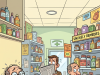
I stood paralyzed in the baby aisle, staring at a package of diapers while running a desperate mental audit. If I put back the peanut butter, can I make this stretch? What about the bread? Can we survive on what’s left in the pantry for another week? Every single item required a sacrifice. Every choice carried a consequence.
That was when the commotion at the checkout lane caught my attention.
The elderly gentleman looked completely out of place beneath the harsh fluorescent bulbs and amid the sea of impatient shoppers. People swerved their carts around him with irritated sighs, cell phones buzzed, and a frantic hum filled the air. Yet, he stood entirely motionless, as if he occupied a slower, much heavier dimension.
The cuffs of his winter coat were frayed to the threads, the fabric worn thin at the elbows. His fingers shook noticeably as he spread a pathetic collection of loose coins and wrinkled bills onto the black conveyor belt. The scruffy dog at his side never budged, its ribs faintly visible beneath a matted coat, its gentle eyes locked entirely on its owner.
The cashier’s voice cut through the ambient noise, flat and unsympathetic. “Sir, your total is higher than what you’ve got here.”
The declaration seemed to freeze the air.
With slow, deliberate movements, the man slid a single can of baked beans out of his pile, placing it gently on the counter as if it were a fragile artifact. “Is that enough to cover it now?” he inquired, his voice barely a breath.
“You’re still short by three dollars,” she responded mechanically. “Do you need to leave the rice behind too?”
The old man looked down at his companion. For a few agonizing seconds, he didn’t move. His hand hovered uncertainty over the small plastic sack of rice—the only substantial nourishment he had selected. The dog offered a soft wag of its tail, completely oblivious to the cruel mathematics of the moment, unaware of the sacrifice about to take place for its sake.
A knot tightened in my throat.
Before logic could stop me, before I could evaluate the emptiness of my own cart or the terrifying balance of my bank account, my legs moved on their own.
“Hold on,” I called out, my voice ringing clearer than I intended. Several shoppers turned to stare. My cheeks burned with embarrassment, but I didn’t stop. I stepped up to the register and extended the single twenty-dollar bill I had been clutching in my fist like a lifeline. “Please. Use this to cover the rest of his total.”
The old man’s eyes widened in disbelief. “Oh, no, ma’am, I couldn’t possibly—”
“Please, take it,” I interrupted, a sudden wave of emotion catching in my throat. At that exact microsecond, my baby delivered a sharp, rhythmic kick against my ribs—a powerful reminder of exactly what kind of mother I wanted to become. “Keep the groceries. And please, keep the change.”
The cashier let out a quiet sigh of relief, quickly scanning the bill and clearing the transaction. The register beeped, the screen flashed zero, and she slid the plastic bags toward him.
His hands shook with even greater intensity as he gathered his items. He turned his fragile frame toward me, his eyes brimming with tears that he made no effort to wipe away.
“The Lord bless you, child,” he whispered hoarsely. “You have no idea what you’ve just done for us.”
I forced a reassuring smile, even as a sudden wave of financial panic began to claw at my stomach.
That twenty-dollar bill was our final buffer. It was our emergency reserve, our tiny cushion against the unexpected. I had no idea how we were going to absorb that loss. I didn’t know which bill would default now, or which of our own meals would have to be cut in half.
Yet, as I watched him shuffle through the automatic sliding doors, his loyal dog pressing tightly against his leg, an unfamiliar sensation washed over me.
I felt unburdened.
It was as if, by passing that money across the counter, I had managed to shed a piece of my own desperation—the toxic kind of fear that takes root when you begin to convince yourself that you have nothing left to offer the world.
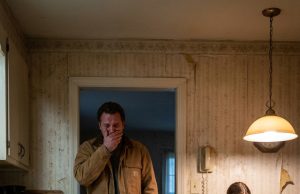
When I confessed what I had done to Tyler later that evening, he rubbed his face with his hands and let out a slow, heavy breath.
“Sweetheart, we really didn’t have twenty dollars to part with right now,” he said gently.
“I know,” I whispered, staring at my lap. I knew it all too well; the reality of our poverty had weighted my chest all afternoon. “But he looked utterly forgotten, Tyler. He looked like he hadn’t had a real meal in days. And his dog…”
Tyler closed his eyes, sighed, and then reached out to pull me into his chest. His embrace was just as warm and solid as the day I met him.
“This is exactly why you’re my world,” he murmured into my hair. “Your heart is far too big for your own safety.”
I rested my weight against him. We were entirely destitute, but in that quiet room, I knew one truth with absolute certainty: no matter what we lacked, we possessed an unbreakable bond.
That night, my stomach grumbled with hunger—but my soul was entirely at peace.
The following morning, reality shattered our quiet sanctuary.
A series of loud, urgent knocks reverberated through our front door, startling me out of a deep sleep. My pulse instantly skyrocketed. For a terrifying second, I was convinced the property manager was standing outside, ready to demand the rent payment we were already struggling to assemble.
Tucking my robe around my pregnant belly, I hurried toward the entryway, bracing myself for a confrontation.
When I threw the door open, the hallway was empty.
But as I looked down, my breath caught. There, resting dead center on our worn welcome mat, was a massive cardboard storage box. It was securely taped and bound with a neat length of heavy twine. Resting squarely on top was a piece of folded notebook paper.
The corridor stretched out in total silence. No retreating footsteps, no closing elevator doors. Whoever had delivered it had vanished like smoke.
My hands shook violently as I knelt down to retrieve the letter. The handwriting was uneven, shaky, yet written with absolute intent:
To the angel who threw me a lifeline when the world offered nothing. May this bounty provide for you and your unborn child more than you can fathom. With eternal appreciation – Thomas (and Buddy).
My legs gave out before my brain could fully digest the words. I sank heavily onto the hardwood floor, the note pressed tightly against my heart.
Thomas.
Buddy.
With trembling fingers, I sliced through the twine and pried open the cardboard flaps.
The contents inside left me completely breathless. It was an abundance beyond my wildest calculations. Inside were boxes of diapers—multiple packs in the exact size I had been agonizing over the previous afternoon. There were canisters of premium baby formula. Canned vegetables and proteins lined the perimeter. Fresh apples and oranges were individually wrapped in tissue to prevent bruising. There were fresh loaves of bread, jars of peanut butter, bags of rice, and dried beans.
Tucked securely into the center of the supplies was a velvety, pristine stuffed bear. A tiny handwritten tag was pinned to its ear: For the Baby.
And at the very bottom of the crate lay a sealed white envelope.
My vision blurred with tears as I pulled it open. Inside sat two crisp, one-hundred-dollar bills.
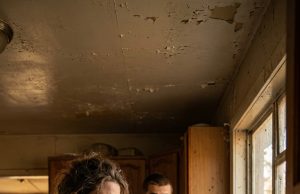
The dam broke, and the tears poured out of me—hot, heavy, and unstoppable. I jammed my hand over my mouth, sobbing silently as I tried to calm my erratic breathing.
I had no inkling of where Thomas lived. I had no idea how a man in his position had managed to coordinate such an immense gift. I didn’t know if he had family who finally stepped in, or if someone else had shown him mercy the way I had shown him.
But a profound realization crystallized in my mind at that moment.
Compassion has an echo.
It ripples outward into the universe in patterns we can never predict. It travels across distances we cannot see, and occasionally, it loops right back to us at the precise moment we are about to break.
I had surrendered twenty dollars simply hoping to bring a fleeting moment of relief to a stranger’s bleak afternoon. Instead, that small seed had returned to me multiplied a hundredfold—not merely in physical provisions, but in a priceless restoration of hope.
That morning, sitting on the cold floor of our cramped apartment, surrounded by mountains of baby supplies, groceries, and a stuffed toy for the child I was preparing to bring into the world, I discovered a truth I will carry to my grave.
Even when you feel utterly depleted, you always possess the capacity to give. And sometimes, the simplest act of human decency is the key that unlocks a miracle.