Darkness is not black.
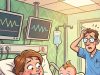
When you’re trapped inside your own body, darkness is gray—broken by flashes of hospital lights, the steady beep of machines, and voices you’re not meant to hear. Sound becomes everything when your eyelids won’t open and your fingers refuse to move.
My name is Elena Castillo—at least that’s what the medical chart at the foot of my bed in the ICU of La Paz Hospital in Madrid says. To my husband, Carlos, and the woman holding his arm with intimate familiarity, I am something else entirely.
I am an obstacle.
One they believe has finally been removed.
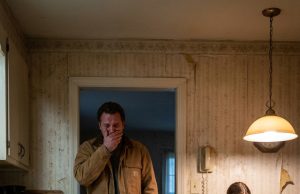
“Finally, my useless wife is gone,” Carlos said, his voice echoing through the sterile room. “Now I can breathe.”
There was no grief. No sadness. Only relief—obscene, triumphant relief. I heard the pop of a cork.
Champagne.
In a hospital room. In front of my motionless body.
“Now we can be together openly,” Valeria murmured. My friend. The woman who used to drink coffee with me in Plaza Mayor, shop with me on Serrano Street. “No more hiding. No more waiting for her to leave the house.”
My mind screamed.
I’m here. I hear you. I’m not d3ad.
But the machines didn’t care. The ventilator breathed for me. The monitor beeped on, indifferent. I was alive—and powerless.
Carlos stepped closer. I smelled tobacco and mint on his breath.
“Look at her,” he said with disgust. “All that cooking, cleaning, trying to please me. What a waste of a life.”
“She was pathetic,” Valeria laughed softly. “Always trying so hard. No class. No ambition. Just useful.”
Tears burned behind my closed eyes. I remembered everything.
Waking at six to make his coffee exactly how he liked it. Ironing his shirts. Shrinking myself at business dinners so he could shine. Three years of marriage where I made myself small so he could feel important.
And now, they were erasing me.
The door opened. Heels clicked against the floor.
My mother-in-law, Doña Isabel.
“Has it happened yet?” she asked coldly.
“Soon,” Carlos replied. “The doctor says the chances of waking are minimal.”
“I warned you,” she said. “A woman who tries too hard loses her place. At least now you’re free.”
Free.
Free from what?
From my love?
From the woman who saved his business from bankruptcy three times without him ever knowing?
The doctor entered.
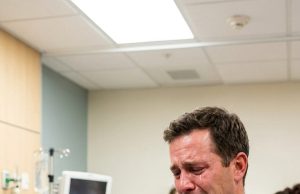
“Your wife is critical, but not dead,” Dr. Martínez said carefully. “There is still brain activity. Sometimes patients in this state can hear.”
“She’s already gone,” Carlos snapped. “When can we disconnect her?”
“Spanish law requires thirty days of observation.”
“Thirty days?” Valeria protested. “That’s forever!”
But my mind latched onto those words.
Thirty days.
I had thirty days to survive.
The days passed slowly. I learned the nurses by their footsteps. Lucía spoke to me gently. Carmen hummed while checking my vitals. They were my only link to humanity.
Carlos visited often—not to comfort me, but to brag on the phone about the life insurance.
“As soon as everything’s legal, I’m buying a Porsche,” he laughed. “She didn’t leave a will. Everything is mine.”
Everything?
He believed the money came from his mediocre logistics company. He never questioned the contracts. The loans. The approvals.
Because he never knew the truth.
I am Elena Castillo.
The sole heir and majority shareholder of Inversiones Hispania, one of Southern Europe’s largest investment groups.
I hid my wealth because I wanted love—not admiration for my money. I chose simplicity. Humility.
I fed a parasite.
By day twelve, they were choosing my coffin.
“Why spend three thousand?” Valeria said. “She won’t know.”
“Particleboard,” Doña Isabel agreed. “Eight hundred euros is enough.”
Carlos laughed. “She always hated extravagance.”
I refused to die.
Day eighteen. They discussed redecorating my house.
“Get rid of her clothes,” Valeria sneered. “They depress me.”
Move.
Move your finger.
A twitch. Small. Invisible.
But it happened.
Day twenty-two. The doctor noticed changes.
“It could be consciousness,” he said.
“Nonsense,” Doña Isabel dismissed.
That night, I opened my eyes.
Just for a second.
I saw the ceiling. I closed them again.
Day twenty-four. I woke.
I coughed against the tube. The monitor spiked. Nurses rushed in.
“She’s awake!”
They removed the ventilator. Air burned my throat—but it was freedom.
“Don’t tell them,” I whispered to the doctor. “Please. Not yet.”
He looked at me, understanding in his eyes.
“Just a few days,” I begged. “Until day thirty.”
The next days were an act worthy of an Oscar. When they came, I lay still. When they left, I trained. I ate. I regained strength—with the nurses’ help.
On day twenty-nine, they finalized my funeral.
At my estate in Seville.
My estate.
Day thirty—the day of disconnection.
Dr. Martínez announced a transfer to a private clinic. Furious, Carlos signed the papers.
The ambulance left.
Once out of sight, I sat up.
“Where to?” the driver asked.
“To Seville,” I said, removing the IV. “I have a funeral to attend.”
We stopped to meet my lawyer, Sofía. She cried when she saw me alive.
“You own everything,” she told me. “The house. The company. The cars. He owns nothing.”
Perfect.
At sunset, we arrived at the estate.

Music played. Flamenco. Laughter.
My wake.
I wore a white suit. Painted my lips red.
War red.
I walked in.
Carlos raised a glass.
“To Elena.”
“Thank you for the toast,” I said calmly.
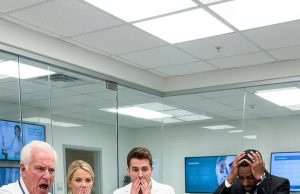
Silence exploded.
The glass shattered. Valeria screamed. Doña Isabel collapsed into her chair.
“I’m sorry I’m late to my own funeral,” I said. “Traffic was terrible.”
Carlos stammered. “You were dead.”
“Disappointed?” I smiled. “I heard everything.”
I faced Valeria.
“Nice dress. Looks like one I lost.”
I faced Doña Isabel.
“The coffin was particleboard? How thoughtful.”
Carlos tried to hug me.
“Don’t touch me.”
“I heard you celebrate my death,” I said. “Tonight, we tell the truth.”
Sofía stepped forward with the documents.
“This house is mine. Your company survives because of my money. You’ve never owned anything.”
Doña Isabel whispered, “You’re just a housewife.”
“My grandfather founded the Castillo Group,” I replied. “I’m the only heir.”
Silence.
“I’m a multimillionaire,” I said. “And you just lost everything.”
I picked up my phone.
“Go ahead,” I said calmly.
I pressed the call button on my phone.
Within minutes, the music stopped.
Two police officers entered the courtyard, followed by a notary and a representative from the bank. Murmurs rippled through the guests. Phones were raised. No one laughed anymore.
Carlos tried to speak. Nothing came out.
“Mr. Ramírez,” the officer said calmly, “we’re here regarding allegations of financial fraud, coercion, and attempted unlawful termination of life support.”
Valeria staggered back as if struck.
“This is insane,” she whispered. “This is a misunderstanding.”
“No,” I said quietly. “This is documentation.”
The notary opened the folder. Deeds. Contracts. Bank records. Signed guarantees. Proof of transfers—every bailout, every silent rescue, every lie Carlos had lived comfortably inside.
“The house you live in,” I said, “was never yours. The company shares you bragged about? Held in trust. Revocable. Which I’ve just revoked.”
Carlos collapsed into a chair.
“And the life insurance?” I added. “Invalid. Fraud clauses are very clear.”
Doña Isabel began to cry—not from guilt, but from fear.
Valeria tried to leave. The officers stopped her.
As the guests slowly backed away, embarrassment hanging in the air, Carlos finally looked up at me.
“You planned this,” he said hoarsely.
“No,” I replied. “I survived it. You planned my death.”
I turned to the crowd.
“This gathering is over. Thank you all for attending my funeral.”
No one stayed.
By midnight, the estate was empty.
Carlos was escorted out—not as a grieving husband, but as a man who had lost every illusion he lived by. Valeria disappeared from his life the same night the money did. Doña Isabel moved in with a cousin, furious and powerless.
The next morning, I returned to Madrid—not to the hospital, but to my penthouse overlooking the Castellana. Sunlight filled the rooms I had abandoned for a life of false humility.
I didn’t feel victorious.
I felt free.
Weeks later, the divorce papers were signed. Quietly. Quickly. With no arguments left to make.
Carlos tried to contact me once. I never answered.
I reclaimed my name.
My time.
My life.
I learned something important in that hospital bed, listening to people plan my end.
Love that requires erasing yourself is not love.
Humility that invites cruelty is not virtue.
And silence is only powerful when it’s chosen—not forced.
I didn’t rise from the dead to destroy them.
I woke up to finally stop sacrificing myself.
And that was enough.
—The End.